
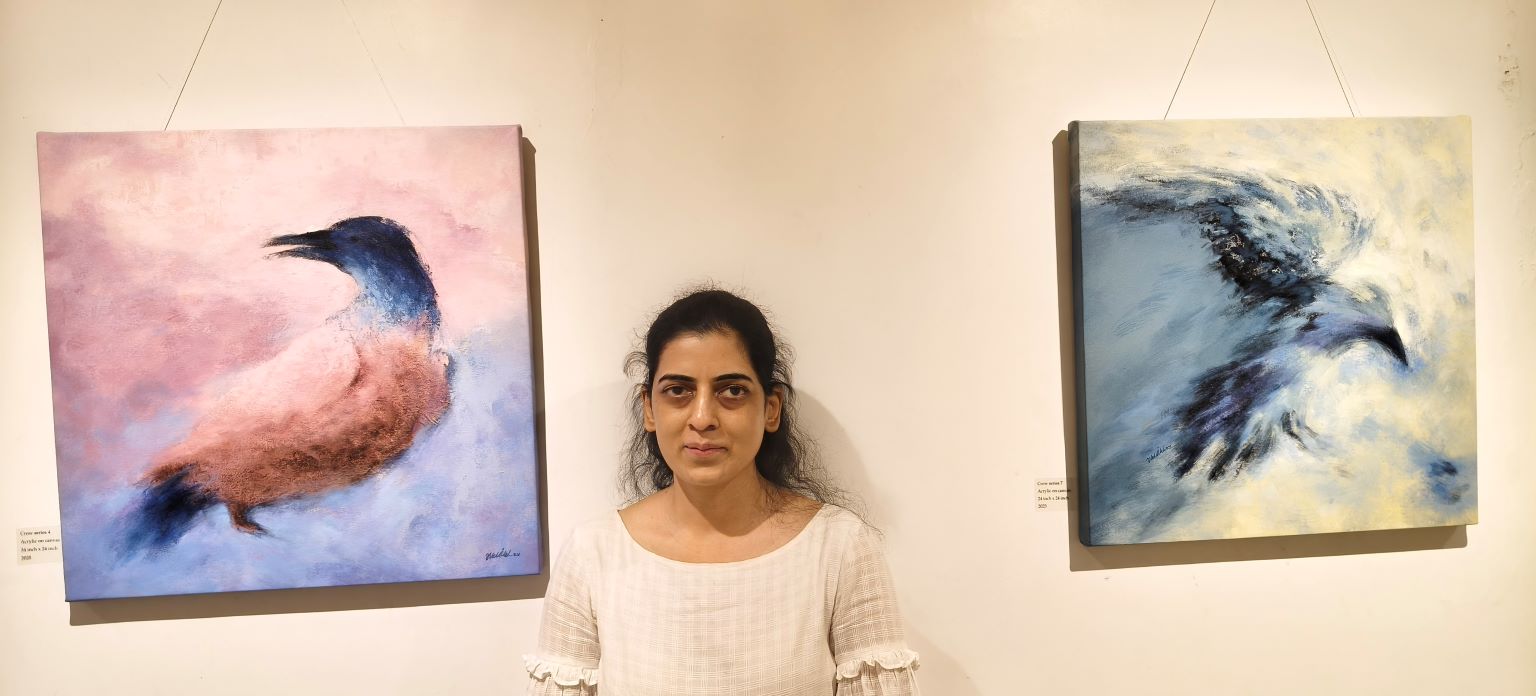

At the Jehangir Art Gallery, Mumbai, a highly talented artist Ms. Mahananda Sagare presents a deeply introspective body of work that transforms the often-misunderstood crow into a profound metaphor for coexistence, memory, instinct, and emotional continuity. Her paintings do not merely depict birds or trees; they construct an atmospheric psychological terrain where nature becomes a language of feeling rather than form.
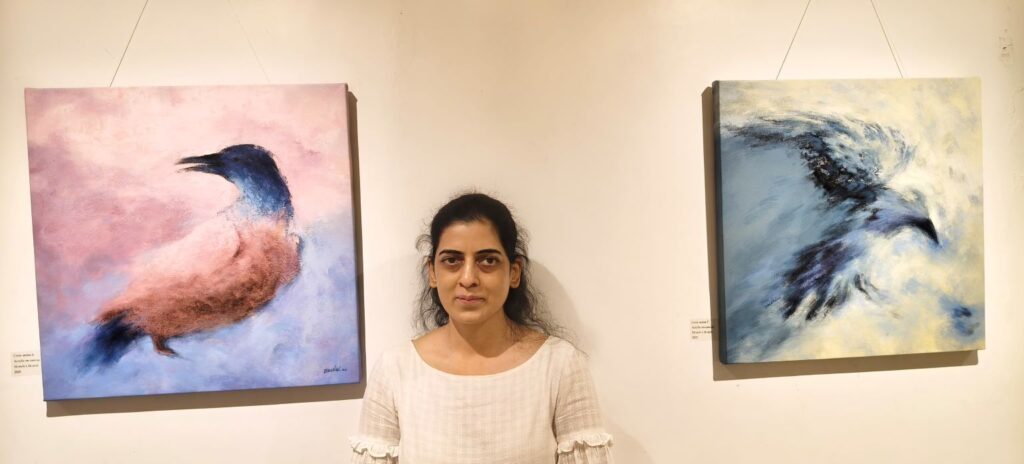
Born in Sangli in 1983 and academically trained at Kalavishwa Mahavidyalaya, Sangli, and Abhinav Kala Mahavidyalaya, Pune, Sagare brings to her practice both technical maturity and emotional restraint. Having worked extensively with oil in her formative years before embracing acrylics over the past sixteen years, she demonstrates remarkable control over texture, opacity, and fluid movement. Her parallel engagement as a costume designer in the film industry is equally evident in her painterly sensibility — particularly in her dramatic orchestration of colour, gesture, silence, and visual rhythm. The central subject of her series — the crow — is approached not as a literal creature but as a living emotional entity. In Indian visual memory, the crow has frequently occupied ambiguous symbolic territory, associated with omens, darkness, or folklore. Sagare consciously dismantles that inherited perception. Her crows emerge instead as meditative presences, deeply aware beings sharing the same emotional ecosystem as humans.
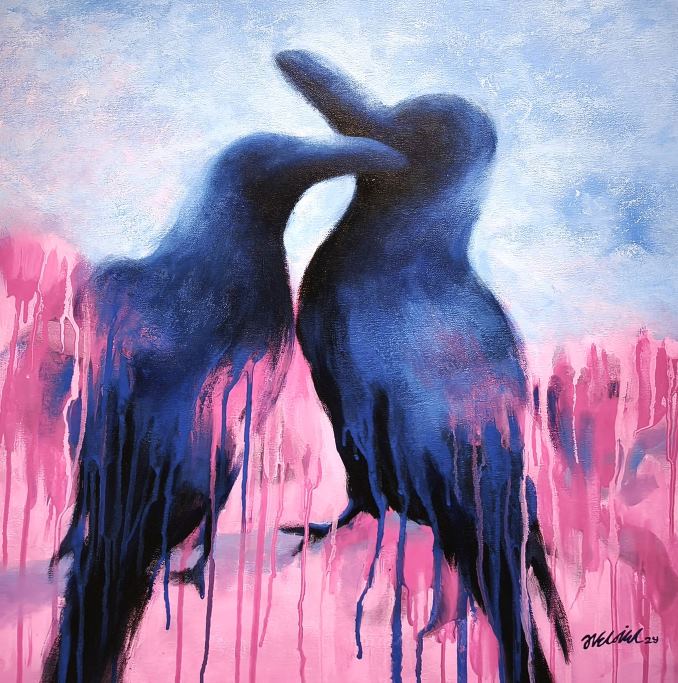
One of the most striking works in the exhibition presents two crows dissolving into one another through flowing indigo forms against a luminous pink ground. The dripping acrylic creates a sensation of melting identities, as though the birds are communicating through touch, memory, or grief rather than sound. The painting transcends ornithological representation and enters the realm of emotional abstraction. The vertical drips resemble tears, rain, or eroding time, reinforcing the fragile intimacy between living beings. Another compelling canvas portrays a solitary crow emerging from a haze of pale lavender and muted rose. Here, the bird appears almost unfinished, dissolving into atmosphere. Sagare avoids sharp contours, allowing the crow to become an extension of wind, sky, and silence. The painting evokes the fleeting nature of existence itself — a meditation on impermanence where form is constantly becoming and unbecoming. The softness of the brushwork carries remarkable emotional restraint, proving the artist’s confidence in suggestion over declaration.
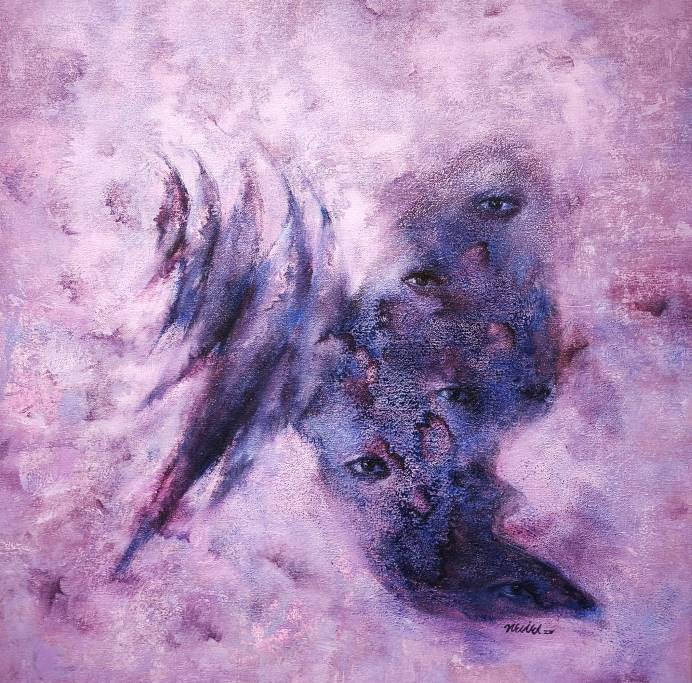
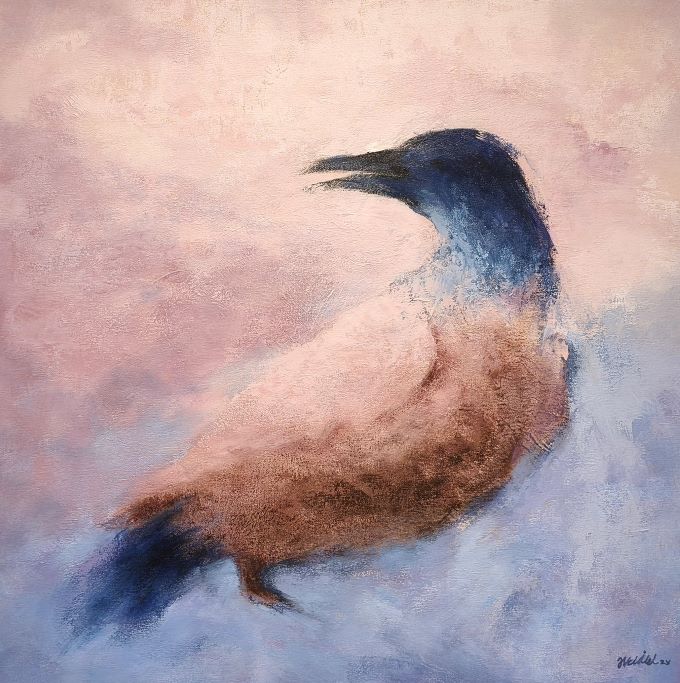
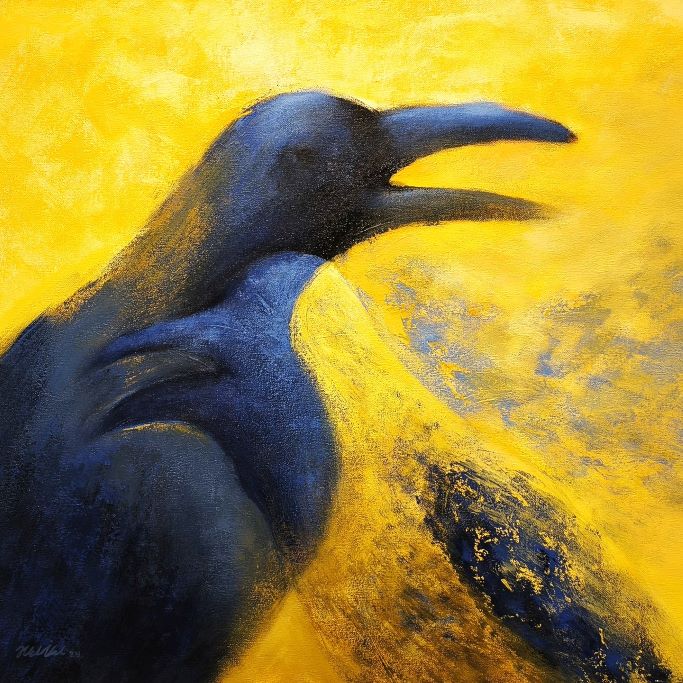
In a particularly evocative composition dominated by electric yellow and deep ultramarine, the crow acquires monumental presence. The contrast between the radiant yellow background and the velvety dark body creates extraordinary psychological tension. Rather than portraying the bird as ominous, Sagare infuses it with dignity and vitality. The crow appears alert, vocal, almost philosophical — a messenger emerging from the subconscious. The textured gold-like pigments surrounding the figure further elevate the bird into a near-sacred iconography. Equally noteworthy is her treatment of movement. In one painting, the crow appears suspended mid-flight, its body dissolving into sweeping gestural strokes. The image is less about anatomy and more about energy. The brushwork becomes kinetic, almost calligraphic, suggesting the invisible currents that connect sky, tree, wing, and spirit. This ability to merge abstraction with figuration gives Sagare’s work its distinctive visual language.
What ultimately distinguishes Mahananda Sagare’s practice is her refusal to romanticize nature. Instead, she listens to it. Her paintings emerge from prolonged observation, lived intimacy, and emotional reciprocity with the natural world surrounding her home. The trees in her courtyard are not passive scenery; they are participants in an ongoing dialogue. The crows are not subjects; they are companions, presences, carriers of rhythm and memory.
In an era where urban life increasingly distances humanity from non-human existence, Sagare’s paintings gently insist upon attention, empathy, and coexistence. Her works remind viewers that communication is not always verbal, and that silence itself possesses texture, movement, and meaning.