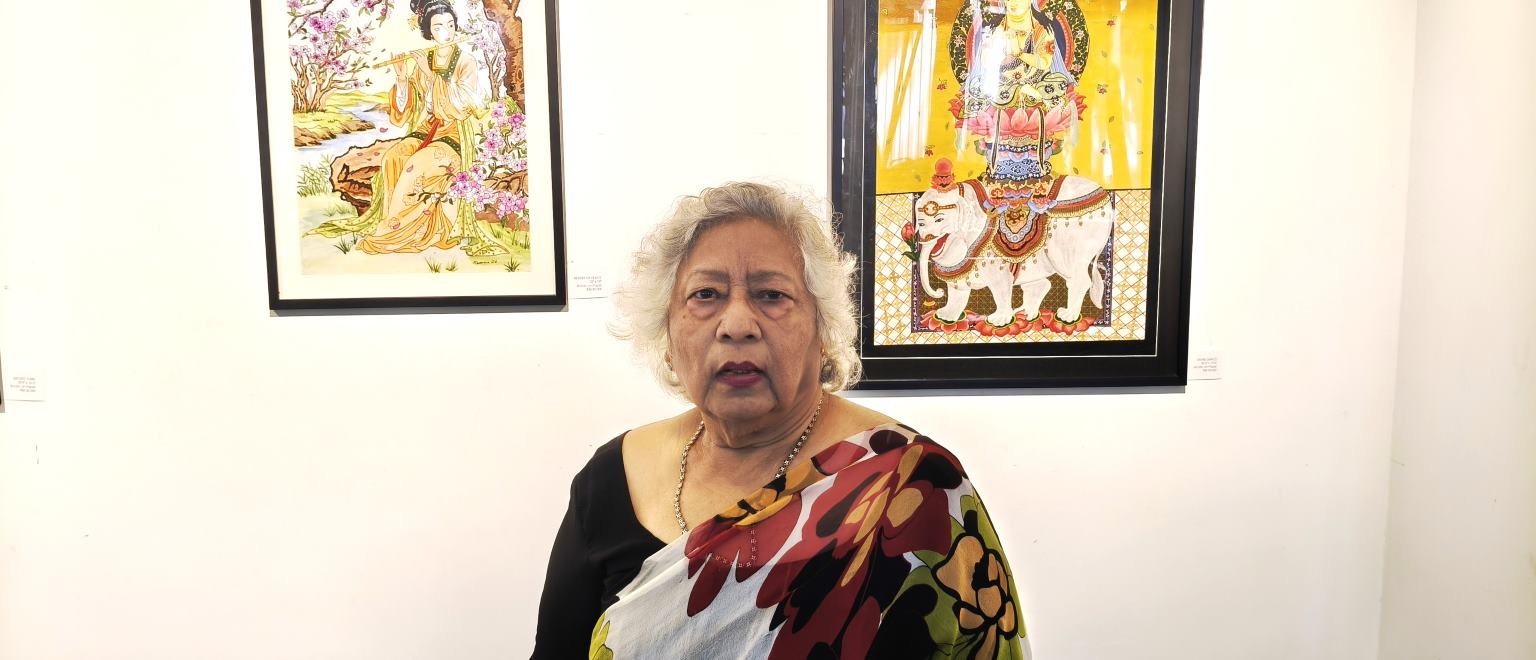
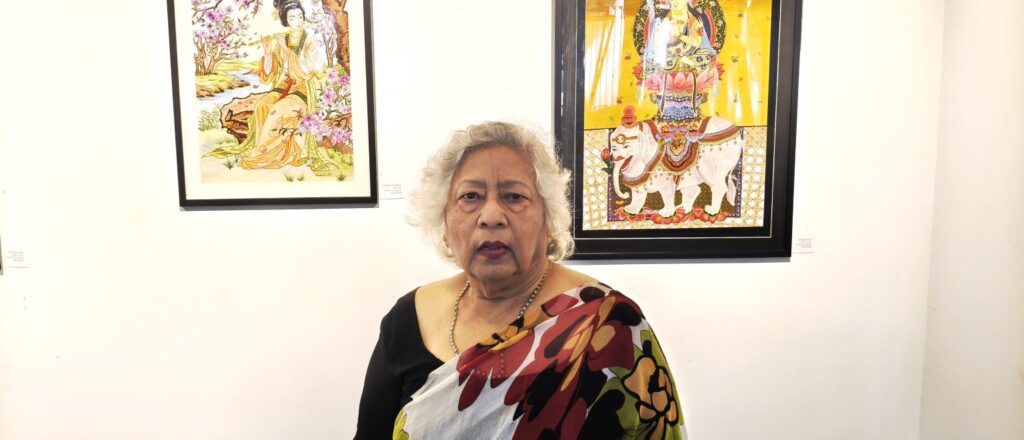
At Mumbai’s historic Jehangir Art Gallery, a very senior artist Smt. Kamna Bhargava presents a deeply contemplative solo exhibition that reintroduces the spiritual intensity and ornamental sophistication of traditional Tibetan Buddhist Thangka painting to contemporary audiences. Far from functioning as decorative surfaces alone, these works operate as meditative portals—rich in symbolism, sacred geometry, and devotional energy.
Bhargava’s practice is remarkable not merely because she embraced art later in life, but because of the discipline with which she has absorbed one of the world’s most intricate sacred painting traditions. Her compositions reveal a refined understanding of canonical Thangka aesthetics: meticulously balanced iconography, rhythmic floral arabesques, jewel-toned mineral palettes, and luminous gold detailing that animates every surface with transcendental radiance.
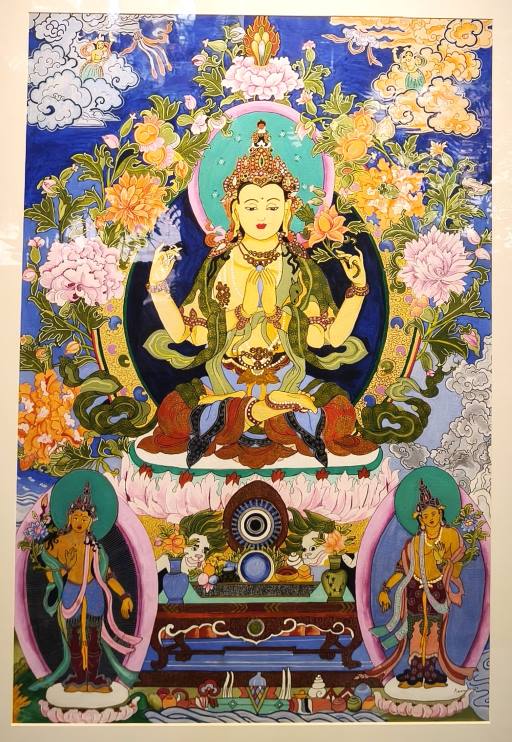
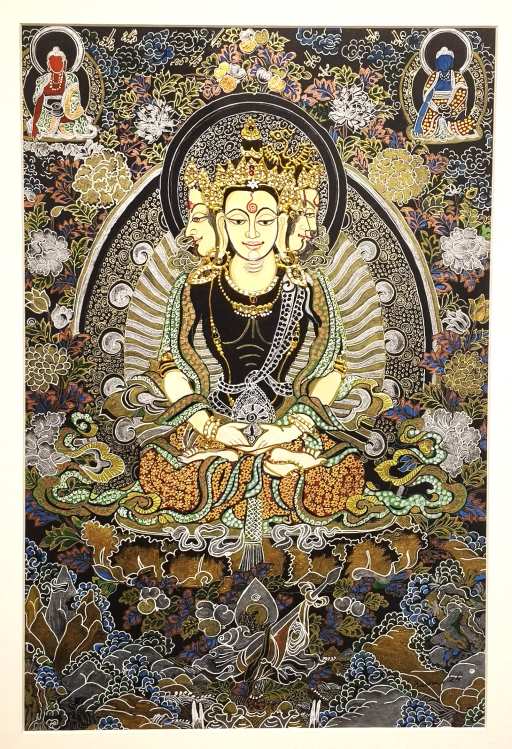
Among the most compelling works is River of Enlightenment, where a multi-faced celestial figure emerges within an elaborate cosmological field of clouds, lotus motifs, and serpentine forms. The painting’s intricate symmetry evokes both visual stillness and metaphysical expansion, while its restrained gold highlights create an atmosphere of ritual sanctity. Equally resonant is Harmony, depicting Ma Tara seated upon a lotus throne playing a musical instrument. Here, Bhargava achieves an extraordinary equilibrium between delicacy and monumentality; the saturated blues, vermilions, and floral embellishments recall Himalayan monastic murals while maintaining an intimate emotional warmth.
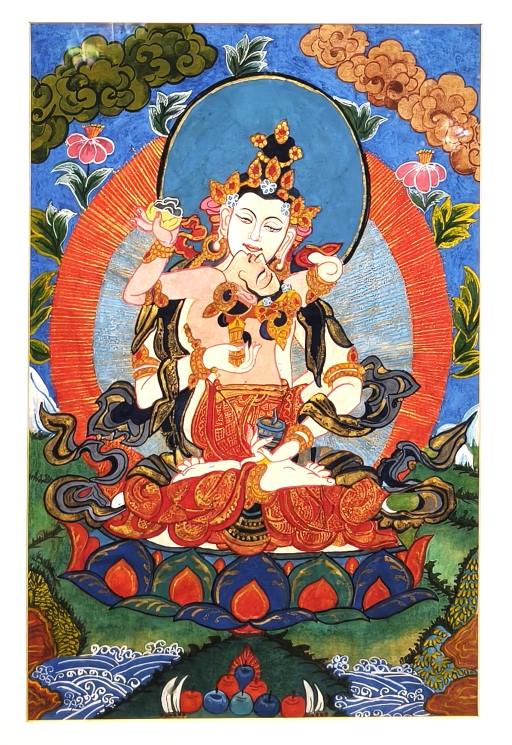
Vajrasattva Yab - Yum - Acrylic on Silk
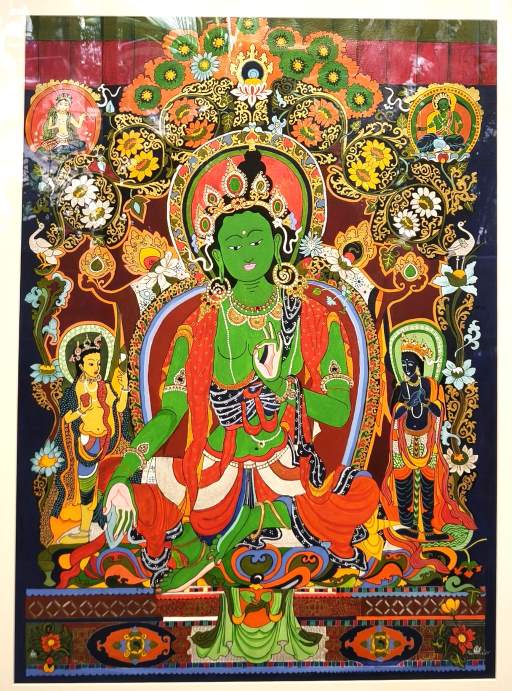
Green Tara- Acrylic on Paper
In the artwork named Green Tara, there is striking Thangka of Green Tara that radiates both spiritual authority and maternal grace. Executed with remarkable precision, the composition follows the classical Tibetan canon where the deity occupies the sacred geometric center, enthroned within an elaborate aureole of floral scrolls and celestial ornamentation. Bhargava’s use of saturated emerald green—symbolic of enlightened action and active compassion—creates immediate visual magnetism, while the vermilion robes intensify the painting’s devotional energy. The detailing is especially noteworthy. The intricate botanical motifs, miniature attendant figures, and ornamental borders reveal immense patience and meditative concentration. Unlike decorative spirituality often seen in contemporary adaptations, this work retains the ritual seriousness of authentic Thangka traditions. The deity’s serene facial expression and mudra establish a contemplative rhythm, inviting the viewer into a state of psychological stillness. The painting succeeds not only as sacred iconography but also as a masterful study in balance, symmetry, and chromatic harmony.
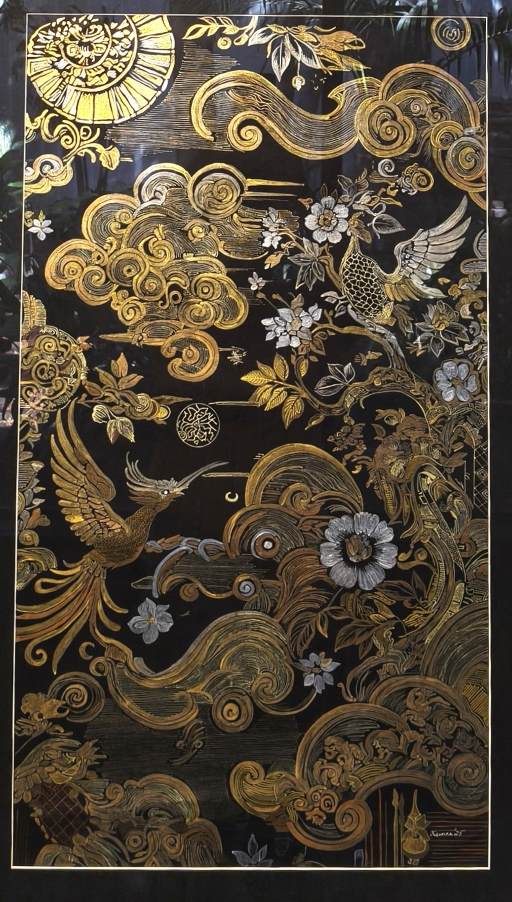
The Heart's Jewel - Acrylic on Paper
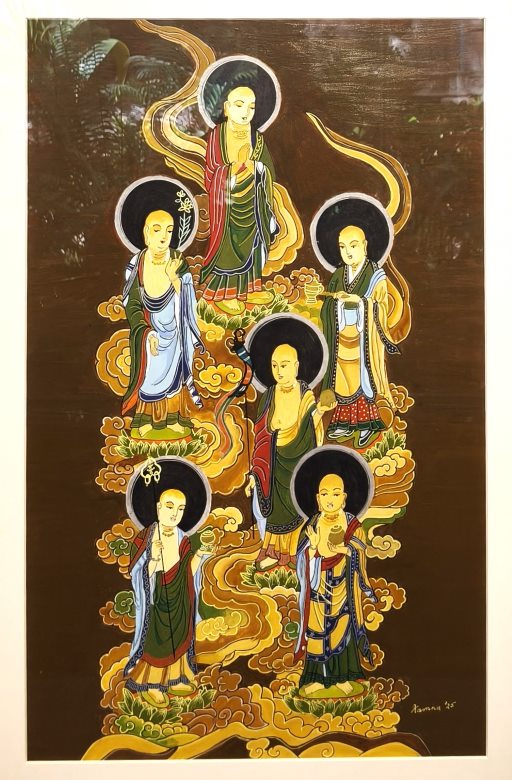
Roku Jizu -Gurdian of the Six Realms
Roku Jizu-Guardian, rendered against a luminous burnished bronze-gold background, this composition depicting Buddhist monks or enlightened disciples possesses an extraordinary sense of silence and transcendence. Bhargava abandons excessive ornamentation here in favour of restraint, allowing the figures’ spiritual presence to dominate the visual field. The flowing golden cloud formations create an ethereal upward movement, suggesting ascension and liberation from worldly attachment.
The painting demonstrates a sophisticated understanding of negative space and sacred proportion. Each haloed figure is carefully individualized through subtle gestures and robe coloration, yet collectively they form a harmonious spiritual continuum. The restrained palette—earth browns, muted saffron, pale jade, and gold—enhances the contemplative quality of the work. There is a manuscript-like intimacy in its execution, recalling monastic scroll paintings preserved in Himalayan temples.