
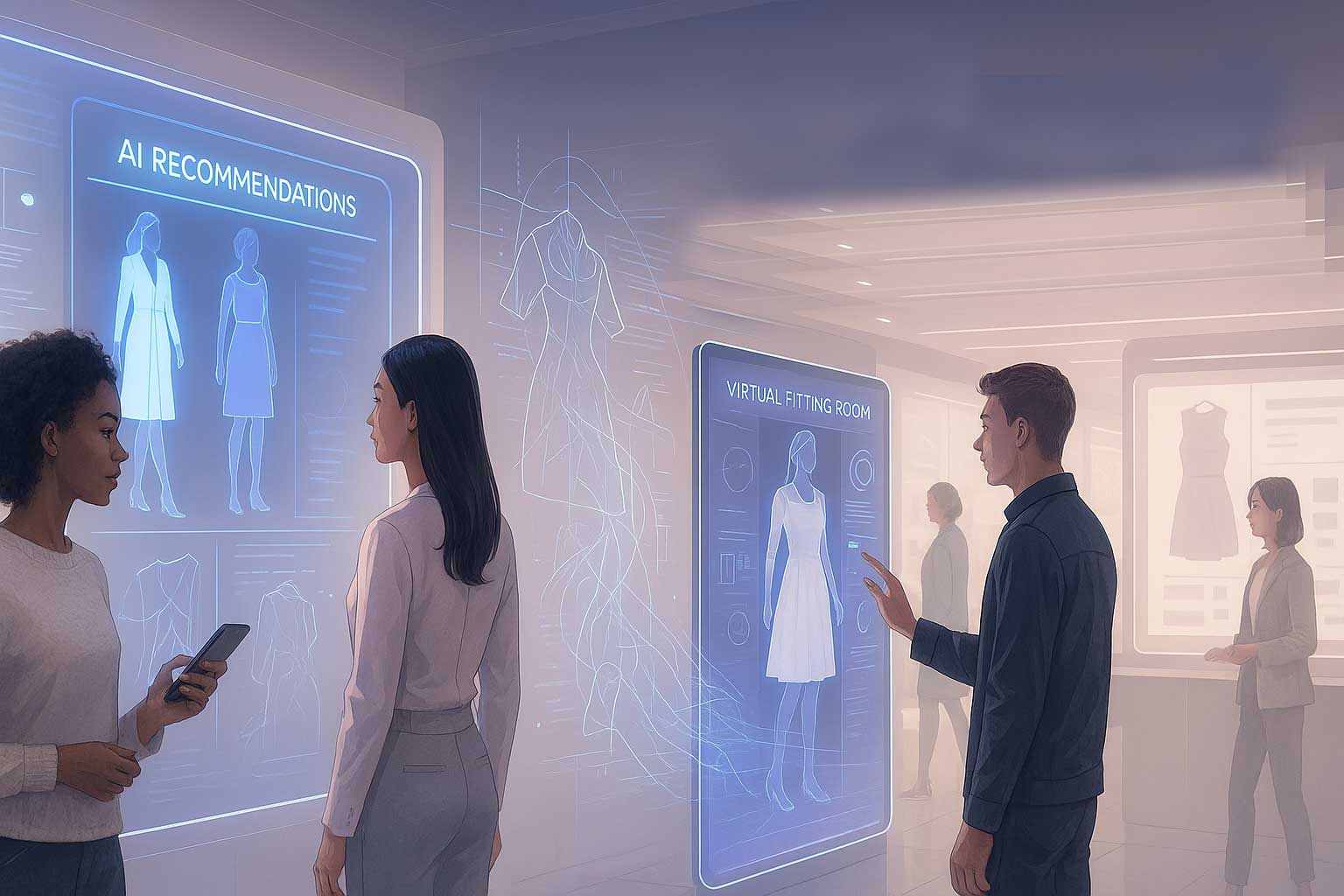

Globally, AI-powered personalization has reshaped fashion retail from the inside out. AI-driven personalization has matured from novelty to necessity. As AI reaches deeper into design, logistics, and digital storefronts, India’s fashion sector is not just adopting global trends – it’s inventing them.
For India’s diverse, aspirational fashion market, it means more than just algorithmic recommendations – it’s about confidence, cultural relevance, and efficiency. Brands that blend visual AI, deep-learning size tools, and hyperlocal insights are not only modernizing retail but they’re reshaping India’s fashion narrative. These ongoing fashion tech innovations are adding strategic advantage to the retailers like, helping engage shoppers visually, building trust & reduce returns and optimize impact & sustainability.
AI-powered personalization isn’t a futuristic concept any longer – it’s a business necessity now. If incorporated thoughtfully, India will lead both in experience-led growth and responsible fashion commerce. Across fashion retail, brands and platforms are investing heavily in intelligent systems that:
Analyze style preferences through image and behavioral recognition (e.g., The Yes uses preference‑based voting to curate women’s feeds).
Enable virtual try‑ons with real-time AR: Pioneers like Perfect Corp have built virtual beauty and apparel try‑on systems that drive engagement and reduce return rates.
Generate personalized content like custom banners or fit-based creatives at scale – helping brands connect meaningfully with customers.
Beyond consumer experience, AI boosts operational efficiencies – from demand forecasting and inventory planning to supply chain optimization. For example, SHEIN’s near-instant trend-sensing engine enables lightning-fast production that’s aligned with real-time demand.
India too is embracing these global techniques – and innovating to fit local nuances:
- Platform-Scale Personalization
Myntra stands at the forefront, powered by features like MyFashionGPT, MyStylist, Maya, and AI-enabled size recommendation – reportedly accounting for 45 % of its revenues. These tools generate fashion advice, size-fit confidence, and enhanced loyalty.
Nykaa, too, uses AI to filter products by skin tone and style, employs virtual try-ons. Over 8 million users have used Nykaa’s virtual try-on tool. It helped reduce returns by 22%, while AI-powered recommendations and size recommendations contributed to a 35% increase in repeat purchases this year.
ABFRL (Pantaloons, Louis Philippe, Van Heusen) uses Algonomy’s AI to deliver Omni-channel personalization, smart “complete‑the‑look” merchandising, and virtual trial rooms.
Reliance Trends & Future Lifestyle Fashions are deploying AI bots for regional language styling advice, design analytics, and forecasting demand six months ahead.
Tata Cliq employs Vue.ai’s AI suite to power image recognition–based product discovery, fusing customer and product data for sharper personalization.
Glance AI transforms users’ lock screens into AI‑powered fashion discovery portals: from selfies to swipeable “looks” and upcoming AR try‑ons, redefining ambient e‑commerce.
Other players Blackberrys, Bata, and TCNS (W, Aurelia, etc.) are adopting AI for enhanced in-store engagement, predictive inventory, chatbots, and improved logistics.
- Tech-Driven Innovation
Startups like Stylumia (trend forecasting), Streamoid (visual search), Vue.ai (catalog automation), and Fabulyst (style assistants) leverage AI to reduce waste and improve customer experience.
A standout global example is Modamia, a brand using deep‑learning-powered styling tools that overlay garments on user photos in real time – driving 85 % engagement increases and 75 % uplift in conversions. This illustrates the powerful impact of visualization-led personalization.
Here are a few more examples of recent innovations:
Amazon India – Deep Fit Personalization
Amazon Fashion India employs deep learning to analyze brand sizing charts, reviews, and user preferences to deliver real-time size suggestions at checkout.
Google’s AI-Mode & Doppl Virtual Try‑On
- At Google I/O, the new AI Mode introduced a virtual dressing‑room allowing users to upload their own photos to “try on” billions of items in Search Labs.
- The standalone app Doppl lets users see animated clones of themselves modelling uploaded outfits-driving real purchases, even with its experimental stage
Alibaba’s Fashion Reels
- The “Fashion Reels” AI tool converts static photos into lifelike videos showing garments in motion, boosting conversions by over 150% compared to static images.
Doji Avatar Try‑On App
- Launched in 2024, Doji generates highly accurate virtual avatars from selfies, allowing users to virtually try on designer clothes – backed by investment from Alexis Ohanian’s VC.
Digital Model Clones in Campaigns
Brands like H&M and Levi’s use AI-generated “digital twins” and virtual influencers for advertising—giving fast-fashion new visual flexibility.
Mad Street Den – Visual AI for Brands
Partnering with Indian retailers, this visual AI engine enabled features like smart catalog tagging and visual search, increasing conversion rates by 18% and reducing bounce rates by 11% .
Virgio – AI in Sustainable Fashion
Founded in 2022 by ex Myntra CEO, this start up integrates AI tools within its circular fashion model to recommend sustainable and size confident outfits to Gen Z shoppers.
AI personalization has crossed from novelty into mainstream – globally with Google, Alibaba, Doji – and more recently in India through Nykaa, Amazon, Mad Street Den, and Virgio. These applications aren’t just boosting engagement – they’re transforming fit assurance, region-aware styling, and sustainable retail models in the complex Indian market.
The Impact & Implications of AI-Powered Personalization
Elevated Customer Experience
Hyper-personalization – through styling advice, real-time recommendations, and virtual try-ons – reduces returns, improves fit confidence, and deepens brand loyalty.
Smarter Inventory & Costs
AI-driven forecasting optimizes stock, preventing over‑ or under‑production. ABFRL’s JIT and Pantaloons’ localized inventory both benefit.
Faster Product-to-Market
Startups like Stylumia and ABFRL’s private-label design engines accelerate launches, shrinking lead times and staying ahead of trend cycles.
Inclusive & Multi‑Lingual Reach
India’s regional diversity is served by AI chatbots and image tools in local languages, making personalization accessible across tier‑2 and tier‑3 cities.
Sustainability Gains
With improved demand prediction and trend intelligence, platforms like Stylumia help reduce overproduction—an essential step amid global sustainability challenges.